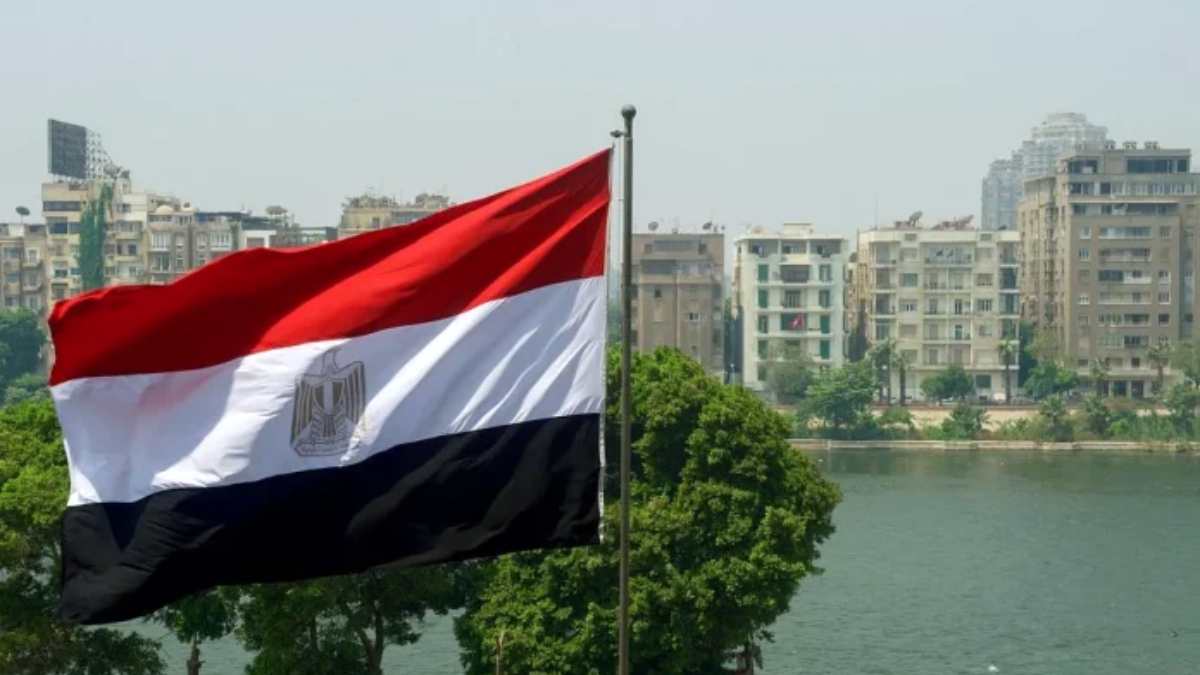

Across the Middle Eastern chessboard, Iran’s strategy over the past two decades reads like a textbook on proxy expansion: Houthi forces have turned Yemen into a missile platform; Hezbollah holds Lebanon in a permanent chokehold; pro-Iranian militias have fragmented Iraq and Syria; and direct or indirect strikes have reached Israeli territory and Saudi energy infrastructure. Virtually no country in the region has been spared Tehran’s projection of force. Virtually none — Egypt has remained outside this map of aggression. Not by oversight, nor by ideological sympathy. But by cold, rational strategic calculation.
A Weight Tehran Cannot Afford to Ignore
Egypt is not just any country. With more than 110 million inhabitants, it is the most populous Arab nation in the world, and it fields one of the largest and best-equipped armies in the region — roughly 440,000 active personnel, with an air force few regional powers can match. Unlike Lebanon, Yemen, or Iraq, Egypt does not exhibit the sectarian or institutional fractures that Tehran has historically exploited to infiltrate and entrench itself. The Egyptian state, despite its deep economic difficulties, maintains an internal cohesion that leaves no room for Iran’s militia networks to take root.
For Tehran, striking Egypt — directly or through proxies — would not mean destabilizing a fragile state. It would mean provoking a major power. The risk-reward calculus is unforgiving. An action against Cairo would not produce the controlled destabilization Iran has achieved elsewhere; it would instead risk consolidating a Sunni Arab front that is already in the process of realignment.
Al-Sisi and the New Gulf Geometry
In recent months, President Abdel Fattah Al-Sisi has pursued a Gulf diplomacy that goes well beyond routine bilateral relations. His visits to GCC capitals — Riyadh, Abu Dhabi, Doha — have signaled something more than Egypt’s perennial search for financial support, however pressing that need remains. They point toward the construction of a shared security architecture, built on converging interests: Red Sea stability, the containment of Iranian influence, migration management, and energy security.

Saudi Arabia’s Mohammed bin Salman has every reason to keep Egypt firmly in his camp. A Cairo-Riyadh axis, with tacit American backing and the military weight that only Egypt can bring to the table, represents precisely the scenario Tehran most wants to prevent. It is no coincidence that the Islamic Republic has invested politically in keeping channels open with Cairo — including diplomatic normalization efforts in recent years — even as it recognizes that relationship will remain asymmetric and fundamentally distrustful.
NEOM and the Economic Stakes
There is a dimension beyond security that may prove equally decisive: the NEOM project. Saudi Arabia’s $500 billion futuristic city-state in the kingdom’s northwest is extending its strategic footprint toward Egyptian territories adjacent to the Gulf of Aqaba. The island of Tiran, returned to Saudi Arabia in 2017 in a move that stirred considerable domestic controversy in Egypt, is already part of this ecosystem. But NEOM’s infrastructure logic also looks toward the Egyptian Sinai as a zone of economic, touristic, and logistical complementarity.
Should Egypt formally integrate into NEOM’s investment corridors and economic routes, its bond with Riyadh would become structural — no longer merely political, but economically binding. For Iran, this scenario amounts to losing whatever remaining leverage it might have hoped to exercise over Cairo. Tehran simply cannot offer Egypt what the Gulf can: capital, infrastructure, and access to global markets.
The Trap Iran Cannot Afford to Spring
Iran’s regional strategic logic rests on a well-tested principle: intervene where the state is weak, society is fragmented, and the cost of entry is low. Egypt denies all three conditions. There is no significant Shia community to mobilize. There are no brittle institutions to infiltrate. And the cost of escalation with Cairo — in terms of military deterrence, regional blowback, and American response — would be prohibitive.
In this sense, Egypt functions as a kind of passive deterrent: its sheer strategic mass protects it without requiring any extraordinary effort on its part. It is gravitational weight, not a missile defense system or a formal alliance, that keeps it safe.
Looking Ahead: The Formalization of a Front
The most consequential geopolitical question for the medium term is not whether Iran will strike Egypt — it will not — but how deeply Egypt will bind itself to the Gulf’s anti-Iranian bloc. There is a meaningful difference between a privileged relationship with Riyadh and Abu Dhabi and full membership in a collective security structure featuring integrated defense components, intelligence sharing, and coordinated deterrence.
Should that step occur, the regional geometry would shift significantly. Iran would face not a collection of individual powers but an arc stretching from the Persian Gulf to the eastern Mediterranean, with Egypt as its anchor of mass. In that context, Tehran’s current caution toward Cairo — today a tactical choice — would harden into a structural and irreversible constraint.
For now, Tehran prefers not to disturb the giant on the Nile. It knows that waking him could cost far more than any strategic gain in the broader regional game.